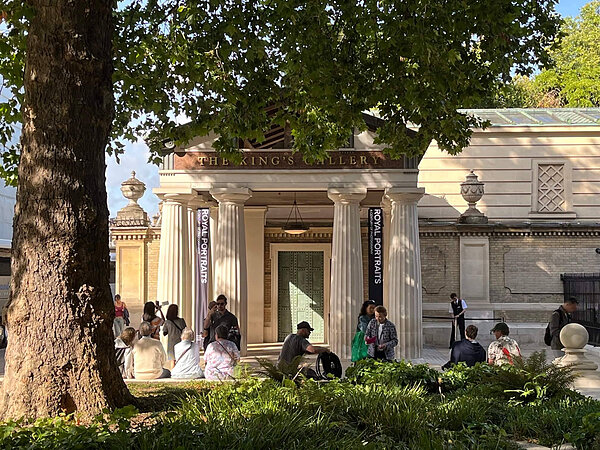
Join the School of Architecture in the Walsh Family Hall for a lecture by John Simpson, Principal, John Simpson Architects, London, England, 2026 Richard H. Driehaus Prize Laureate.
There are many today who argue that we have lost our civilization: that the dominant ideologies of the twentieth century, in their determination to suppress inherited tradition, broke the continuity between the modern world and its cultural past. One consequence was the virtual abolition of the practice of Classical architecture.
Drawing on thirty years of practice, John Simpson argues that nothing could be further from the truth. The twentieth century succeeded not in destroying tradition, but in driving it underground. When the Prince of Wales challenged the architectural establishment in 1984, the floodgates opened. People who had long felt unable to express their attachment to traditional architecture came forward with a sense of emancipation.
In this lecture, Simpson explores Classical architecture as the established body of principles and exemplary works through which generations have been able to communicate with one another. But, like any living tradition, he argues, it needs to evolve: embracing new opportunities and responding to new circumstances and challenges. For a tradition to thrive, change must be absorbed without destroying the continuity that gives the tradition its identity and meaning.
This, Simpson contends, is the critical role of Classicism. It provides the shared language and discipline through which innovation can be understood, tested, and assimilated into the cultural canon. Classicism does not keep a tradition alive by resisting change; it gives that tradition the means to change without losing its identity.
Over the last thirty years, Simpson and architects like him have helped to re-establish the practice of Classical architecture. He closes by making the case that this matters because without the ability to practice, adapt, and extend the Classical language, the tradition cannot become a true living culture capable of changing the world for the benefit of all humanity.
Originally published at architecture.nd.edu.