Lecture: "Ensoulment in Islam"

-

Location: 1050 Jenkins Nanovic Halls

When does life begin? Professor Nahyan Fancy of Exeter University will discuss ensoulment at the intersections of classical Graeco-Islamic legal, theological, philosophical, and medical thought.
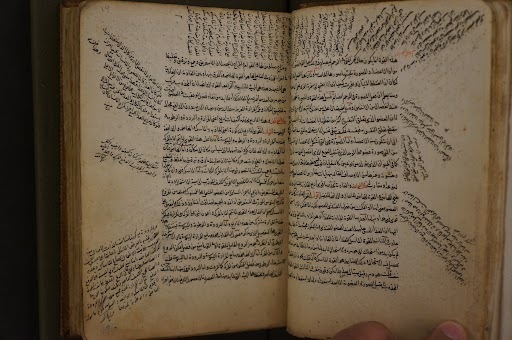
 
This image features an open, aged manuscript of Ibn al-Mubarak al-Qazvini's Sharh al-Mujaz, showing two pages of dense Arabic calligraphy. The text is characterized by its main body of prose supplemented by extensive marginalia, with handwritten notes curving and slanting around the primary columns.
Folio: Ibn al-Mubarak al-Qazvini's (d. after 1523) Sharh al-Mujaz
Ensoulment (literally, “breathing in of the spirit”) was an important discussion in classical Islamic legal works. Numerous Qur’anic verses and Prophetic traditions refer to a stage-wise development of the fetus, and many religious scholars and theologians chose the time of ensoulment as a key developmental stage that makes the fetus a human distinct from a part of the mother’s body. However, there was much debate over the timing of ensoulment and its physiological manifestations in the womb. At the same time, ensoulment was a key concept in Graeco-Islamic philosophy and medicine in thinking about life, and there was much debate over how the fetus's growth in the mother's womb occurred as the faculties of growth and nutrition were deemed to be emanated from a soul. Thus, this tradition also made certain claims with regards to the fetus's acquisition of its own soul and becoming responsible for its physiological actions.
 
This talk will cover how the legal, theological, philosophical and medical discussions intersected over the course of the post-classical period through the philosophical, medical and religious works of Fakhr al-Din al-Razi (d. 1210), Ibn al-Nafis (d. 1288), Qutb al-Din al-Shirazi (d. 1311) and Ibn Qayyim al-Jawziyya (d. 1350), amongst others. The talk will highlight the vitality of the medical tradition during this alleged time of decline and how different scholars negotiated the varied texts and interpretations of fetal ensoulment found in scriptural, philosophical and medical sources.
 
Sponsored by the Mirza Family Professor of Islamic Thought and Muslim Societies, the John J. Reilly Center for Science, Technology, and Values, and the Ansari Institute for Global Engagement with Religion.

Originally published at ansari.nd.edu.